'Sentimental Value' - The Fundamentals of Caring
Trying to articulate how I feel about my favourite film of last year

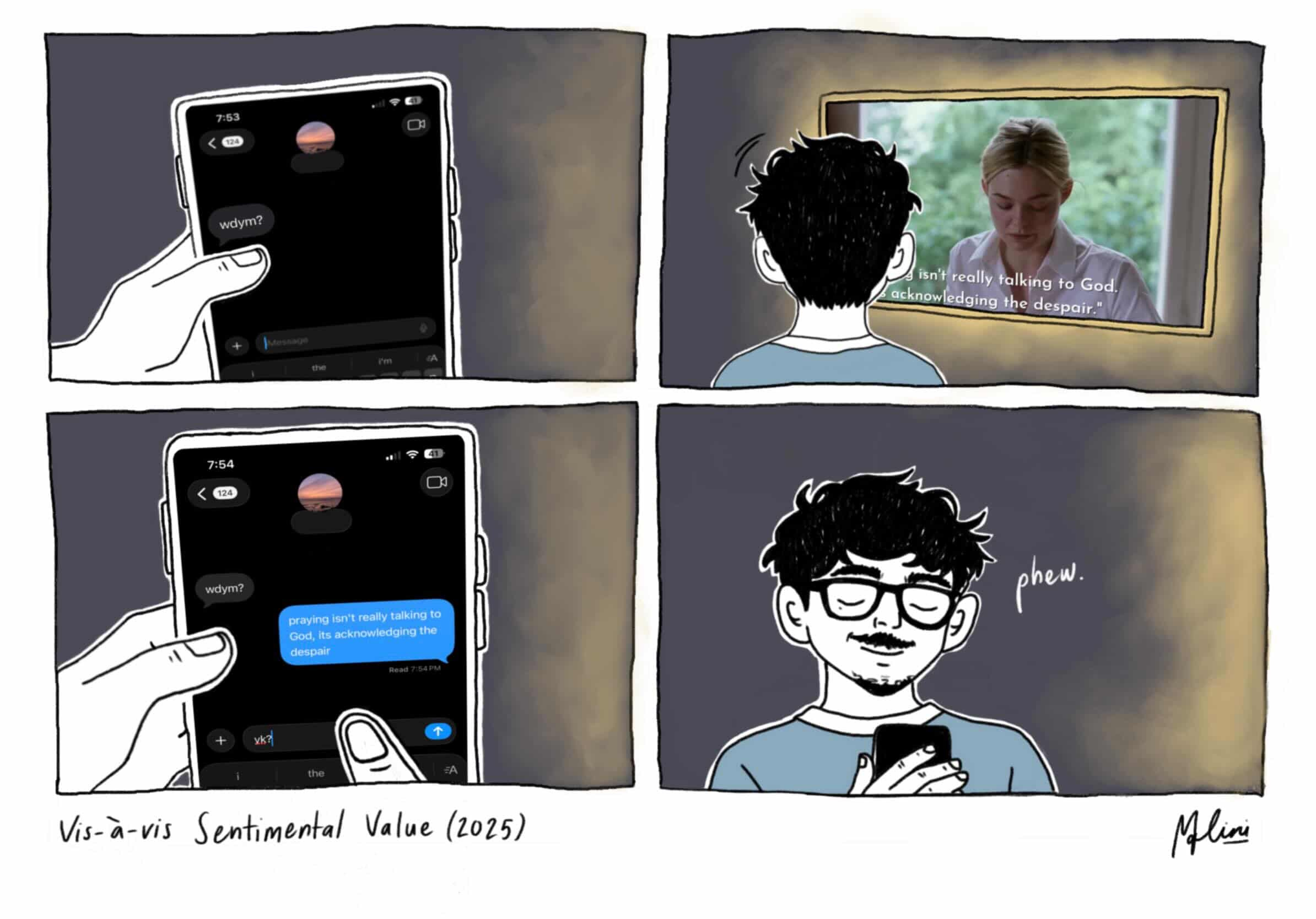
Lately, I’ve become increasingly concerned that my capacity for and understanding of human connection has been limited to how I respond emotionally to the works of fiction I’ve been engaged in - be it film, TV, books… but mostly film, of course. The most incredible thing about the medium is how it can be a means of expression from the point of view of the artist and of empathy for those ideas and feelings expressed on the part of the audience. But for those of us most afraid of the vulnerability required in expressing care for those closest to us, it can also be an escape, a simulation wherein they can really care about something or someone without the responsibility or perceived embarrassment that they think comes with it in practice. I recently watched Mike Mills’ Beginners (2010) for the first time, and there were moments during it where I felt more deeply than I can remember feeling about most of the last three to four years of my own life. In the hours and even days after it ended, I felt a strange emptiness - not only because I loved the movie and didn’t want it to end, but more specifically because it offered me a rare vessel to feel.
These aren’t necessarily unique ideas or experiences with film, but it’s something I’ve been thinking about more deeply now that a film like Joachim Trier’s Sentimental Value (2025), which so empathetically both explores the psychology of such a cinematic escape and offers one, has come along. It was, in fact, pure coincidence that I finally managed to catch Mills’ film on a flight less than a week before joining a couple friends on a cold January evening in Camden to dive into Trier’s latest, despite the two filmmakers being linked in more than a few ways.1
Mills: “Can you tell me a little bit about your Oslo-iness? Your Os-loneliness?”
Trier: “Os-loneliness. You coined a phrase! Oh my god, can I use that, please?”
Mills: “Absolutely. We’ll finance our filmmaking habits by making a t-shirt with that.”
- Joachim Trier and Mike Mills in conversation for Filmmaker Magazine
They’re true contemporaries, having begun their feature cinematic journeys only a year apart (Mills with Thumbsucker in 2005 and Trier with Reprise2 in 2006). They have a similarly gentle and tender sensibility, which can surely be attributed in some part to a bit of sharing of creative personnel - Beginners cinematographer Kasper Tuxen later joined the Trier train with The Worst Person in the World and stuck around for Sentimental Value, and the film’s editor Olivier Bugge Coutté was at the time only taking a short detour from his regular services of cutting Trier’s work, having edited all of his films to date. These overlaps in visual and rhythmic input directly translate to overlaps in how these films are presented formally. The video-essay-like interjections of Beginners mirror the voice-over narrated montages of Reprise; Tuxen’s fascination with close-ups in Trier’s latest two films can be traced back to experimentations with them with Mills in 2010.
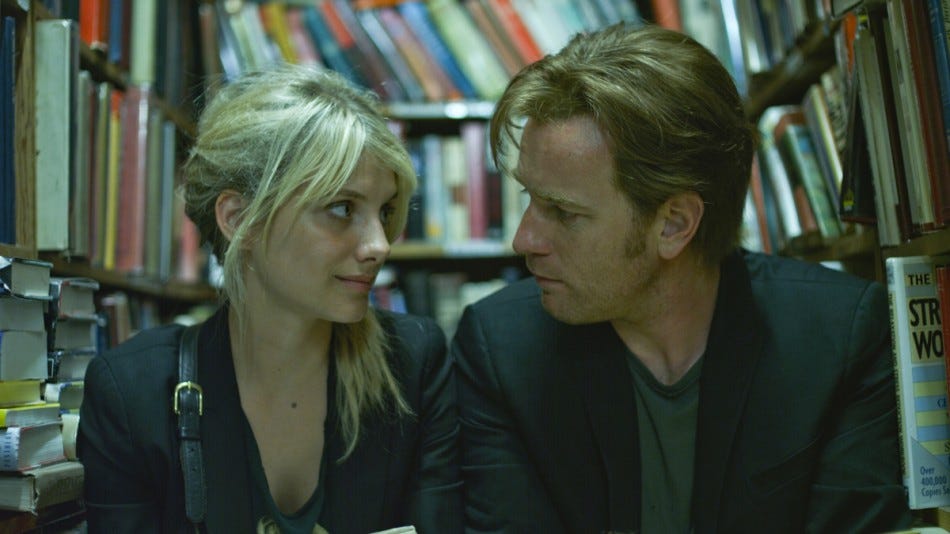
But beyond that, there’s a kind of deeper filmmaking philosophy that comes through in both of these guys’ work that’s hard to define. The best way I can think of describing it, though a bit lazy, would be earnestness. The willingness to be as vulnerable with the camera as their characters are with each other, so that their film is less so a series of build-ups to explosive emotional moments but one long, complicated emotional moment to sit with. I feel Trier is especially concerned with this throughout his filmography, and Sentimental Value is his crowning achievement in evoking this sense.
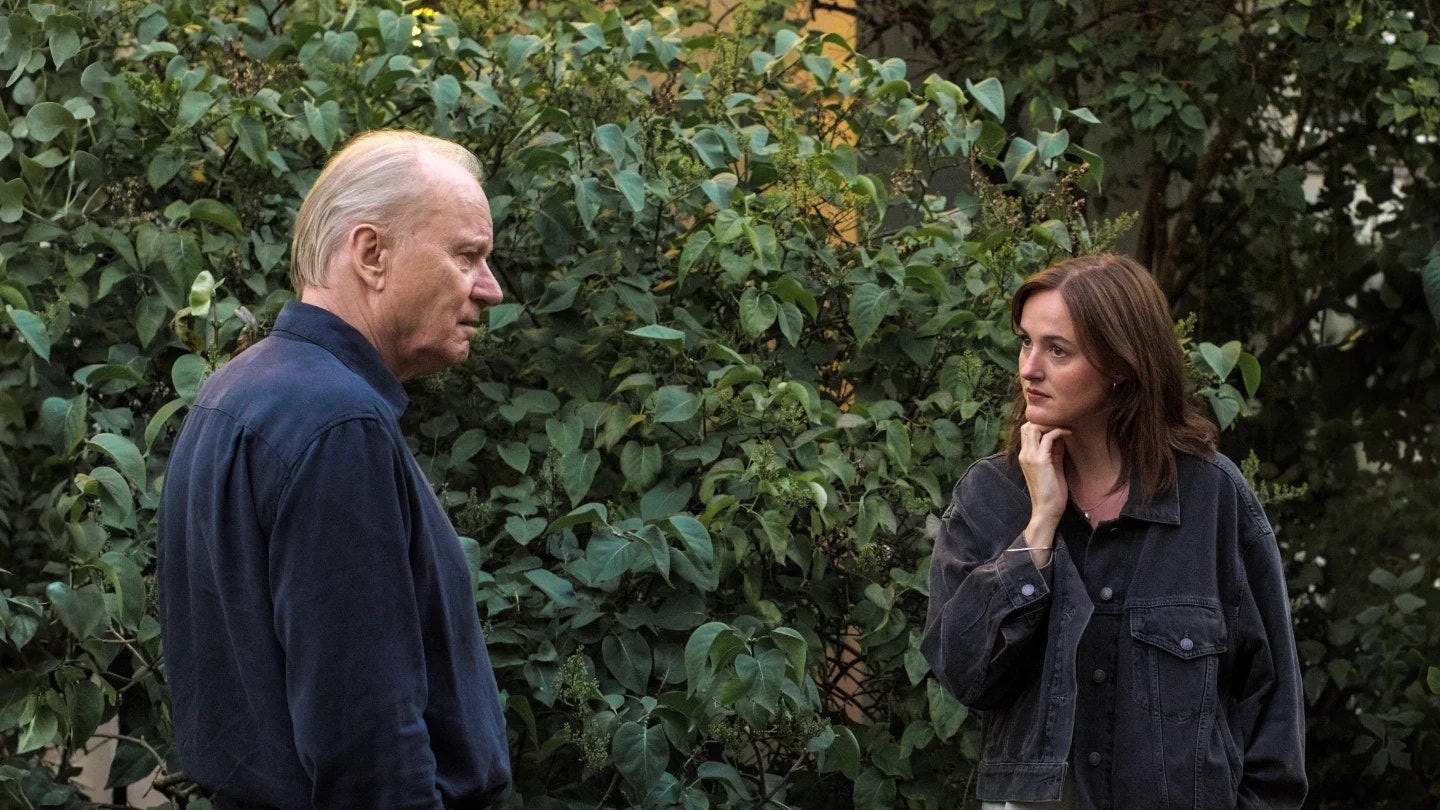
There’s a scene in the film where veteran arthouse filmmaker Gustav Borg (Stellan Skarsgård) presents his latest screenplay to his eldest daughter Nora (Renate Reinsve), an actress, offering her the lead role. It’s one of the earlier scenes that begins to make sense of this central relationship that is so frayed and silently hostile. Suffice it to say, Nora is not interested in the role. At a certain point, they argue about the success of her recent series. She asks what he thinks of it, and, after some hesitation, he tells her. “But that stuff isn’t for me - no visuals, we never really see your face, we don’t see your eyes,” he says, “You’re not the problem with it.”
As it happens, it’s a compliment. It’s also, for me, a thesis statement from the film on how the camera cares. Throughout the scene, Gustav constantly undermines Nora’s work, but unknowingly. What he’s really trying to do is show his daughter that he sees her like no one else does. That he truly knows her. Because his camera, his eye, captures her directly - her face, her eyes - so that she doesn’t have to explain herself. So the full breadth of what she’s feeling can be understood without words. He’s trying and failing to communicate this because it’s not a scene in a film, it’s a conversation, and Nora very justifiably leaves.
“It’s very exciting to show a man who does not know what he’s doing. He does not know why he is making a film that he hopes will bring him and his daughter closer, because he doesn’t know he wants them closer. He’s very bad at communicating feelings in his private life, but he can in his work. And that’s a very common thing.” - Stellan Skarsgård for the MUBI Podcast
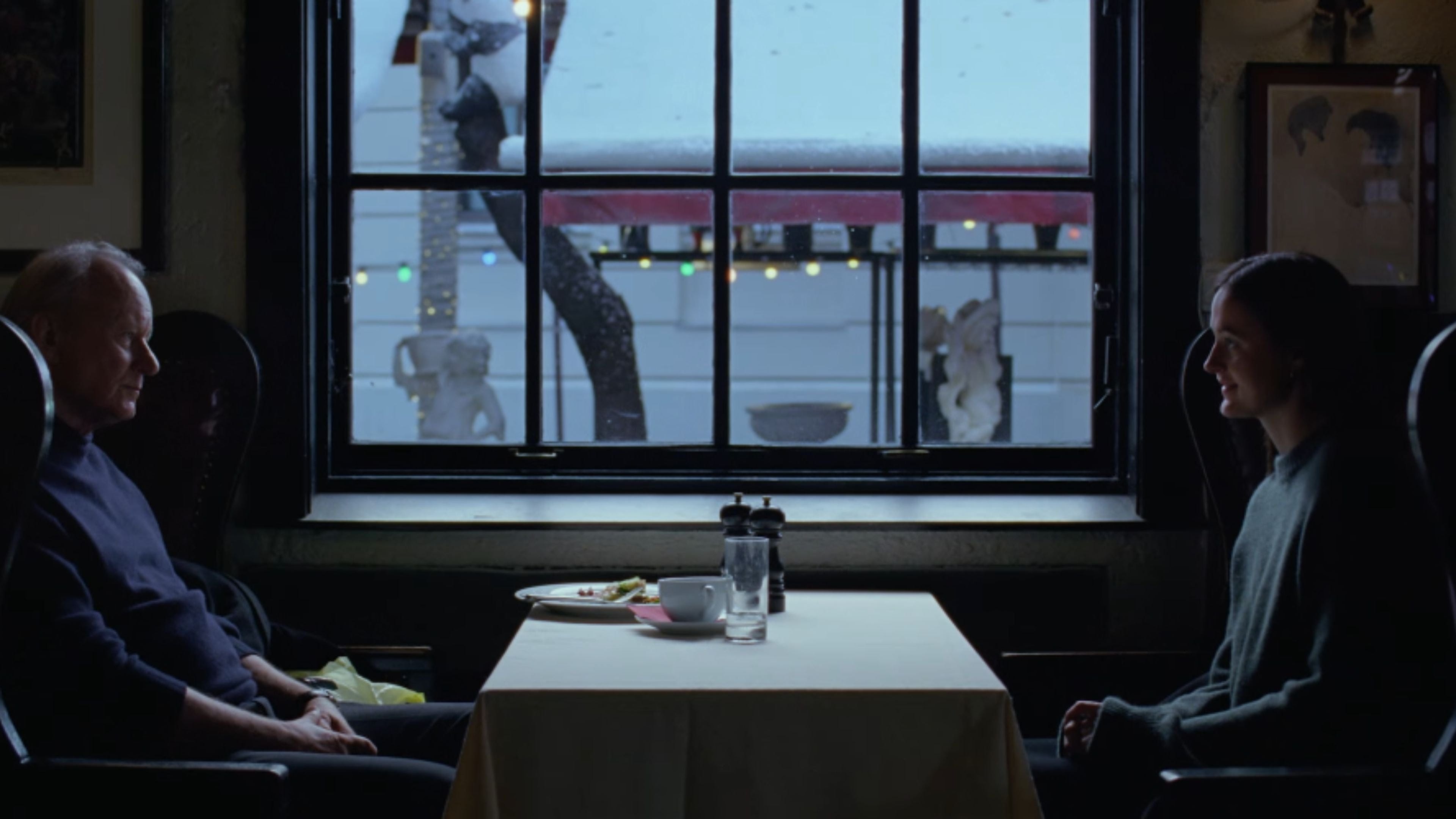
Except it is a scene in a film. And it’s Trier’s camera, holding on his characters’ faces, their eyes, the subtleties of their expressions. Not only is this an extremely effective way of highlighting the spaces between words and the importance of what isn’t said in fractured relationships like those depicted in the film, but it’s also a direct result of Trier’s inherent love and empathy for his characters and serves as his way of encouraging the same from the audience.
This is something I’ve come to associate with the filmmaker as I’ve become more familiar with this work, although simply the sole formal decision of holding on faces for longer than usual may not seem like enough to make this aspect of his filmmaking distinctive. But Trier’s particular brand of visual patience has become something of a trademark given its throughline across his body of work and how it tends to complement a lot of his subject matter. It’d be downright disrespectful to discuss Trier in this depth without acknowledging his perpetual co-writer and writer/director in his own right Eskil Vogt and the humanism of their collaborative writing.
“Eskil and I… we’re really cheesy humanists, so we want to understand everyone. So the conflict is very often internal.” - Trier for Film at Lincoln Center
This was immediately apparent to me with The Worst Person in the World, my first Trier/Vogt film and the first collaboration between them and Reinsve.3 Paul Thomas Anderson recently called the actress “a gift from movie heaven,” adding that her “made-for-the-movies face and talent will take anyone’s breath away.” That’s high praise from the guy who got breakthrough performances out of Adam Sandler, Alana Haim and most recently Chase Infiniti.4
And it’s neither unfounded nor hyperbolic. Reinsve is one of those rare talents who possesses an inherent transparency whenever she’s onscreen. She is an open book, her face is made for the movies not only for her natural beauty but also the captivating earnestness of her expression. It almost seemed a given that Trier and Vogt would work with her again after ‘Worst Person’, and it would follow that they’ll continue to work together in the future. I sure hope it’ll become one of those actor-director pairings that last whole careers.5
The Worst Person in the World is a notable achievement in the sometimes tired coming of age genre in its unflinching and forgiving portrayal of Julie’s (Reinsve) many flaws. She constantly gets in her own way, changing course about a dozen times throughout the film. She says she feels like a spectator in her own life. She’s in a perpetual state of dissatisfaction - whichever new direction she goes in, after a while, she realises it just… doesn’t feel right.
Despite that being a rather universal feeling amongst anyone who ever went through their 20s, and really anyone who’s had a crisis of personality at any point in their life, a protagonist that acts in this way in a film runs the risk of becoming tiring to follow after a point. But Vogt and Trier treat Julie with complete understanding and compassion, writing her as well as Trier’s camera captures her, and as Reinsve plays her. It’s an artistic symbiosis the likes of which you just don’t get very often, and it makes the film the most striking and pointed example of Trier and Vogt’s humanism that I’ve seen so far.
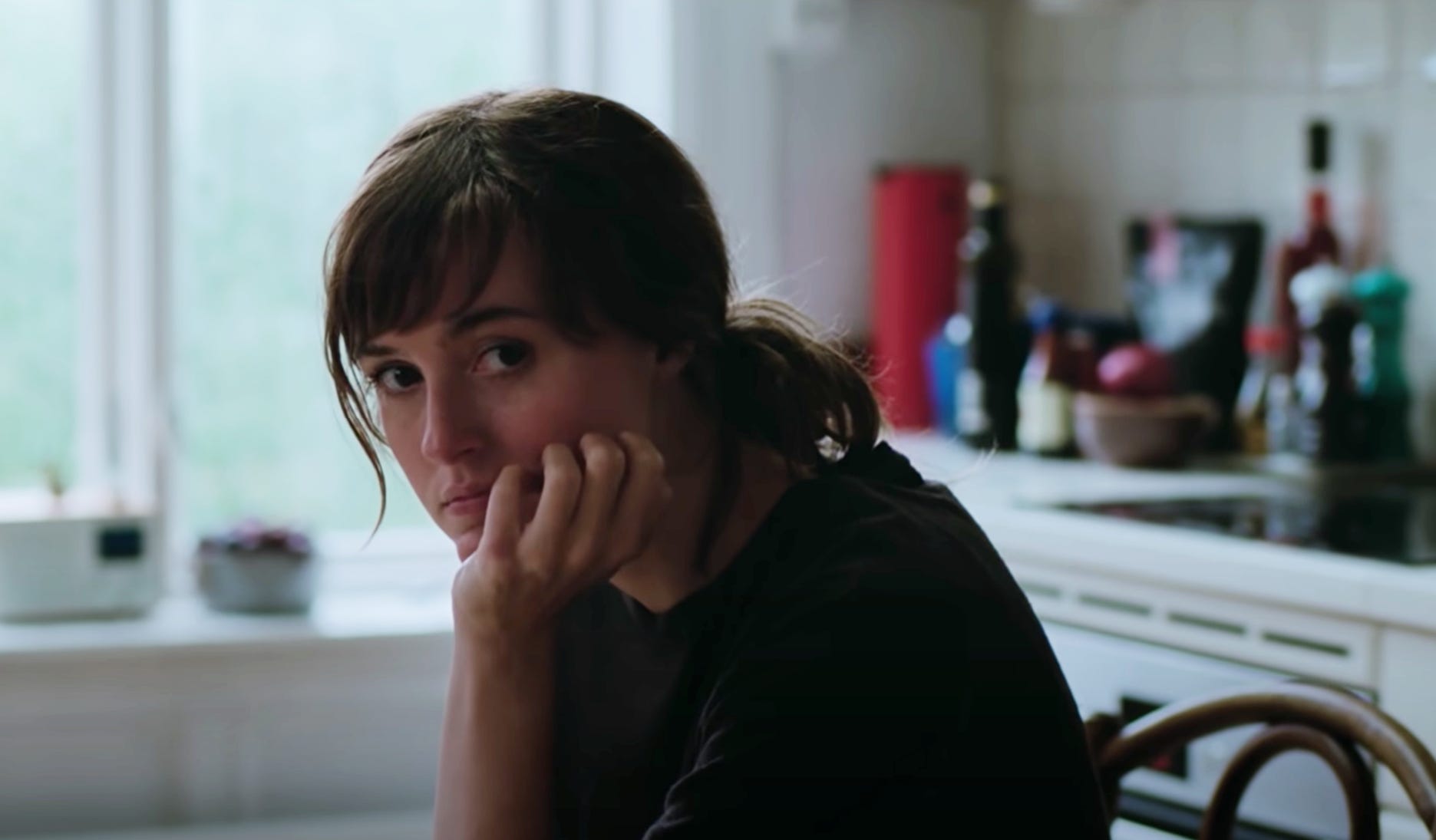
Sentimental Value does this with, like, four characters. And crucially, four actors. It’s hard to consider Nora the protagonist of the film as you come away from it equally struck by the work of Skarsgård, Elle Fanning as Rachel Kemp, the successful American actress feeling out of place as the replacement lead in Gustav’s film, and perhaps most importantly Inga Ibsdotter Lilleaas as Nora’s younger sister Agnes.
She is, in many ways, the heart of the film. As I’ve certainly felt before as the younger sibling, she just wants everyone to get along. Vogt and Trier have spoken about the inception of the film being the idea of two sisters who grew up in the same environment yet have distinct versions of how their childhood felt, which ultimately materialised in Agnes feeling closer to her father than Nora does. But she struggles to acknowledge that she also has deep-seated issues with him and his strong but fleeting periods of parental attention.
Trier often says of Lilleaas that “there’s not a false note in her”, that, not unlike Reinsve, she wears her heart on her sleeve, she renders herself wholly transparent at “action”. It’s true - the actress also possesses that rare quality of earnestness, which makes Agnes’s inner conflict all the more visible and authentic. Trier is clearly attracted to this style of performance as it is complementary to his earnestness as a director. And this is said to translate to his directing practices on set - being in the room, as close to the actors as possible, to truly feel the weight of every expression, feeling what they feel.
This is how we got arguably the most memorable and affecting scene in the film. It comes after one of the other most memorable and affecting scenes in the film, Nora’s “dry” (yet anything but) reading of the monologue Gustav wrote for her. It’s been an emotional afternoon, and the sisters sit at bed together. Nora wonders aloud how Agnes turned out okay despite the childhood they shared - the question at the very root of the creation of the film. And Agnes gives her and us the answer: “I had you.” What follows is an example of the kind of extension of character on the part of the actor that Trier so encourages:
“I really wanted to hug her at some point, but I was scared to improvise and ruin the take. But then Joachim - he’s sitting in the room, he’s not behind the monitor, so he’s very present. And he said “go hug her.” And so I did - I hugged her, and I felt like I wanted to say, “I love you.” Which is, in Norwegian, a very big thing to say… And so I said it because I felt like Joachim had shown me that it’s okay.” - Inga Ibsdotter Lilleaas for MUBI
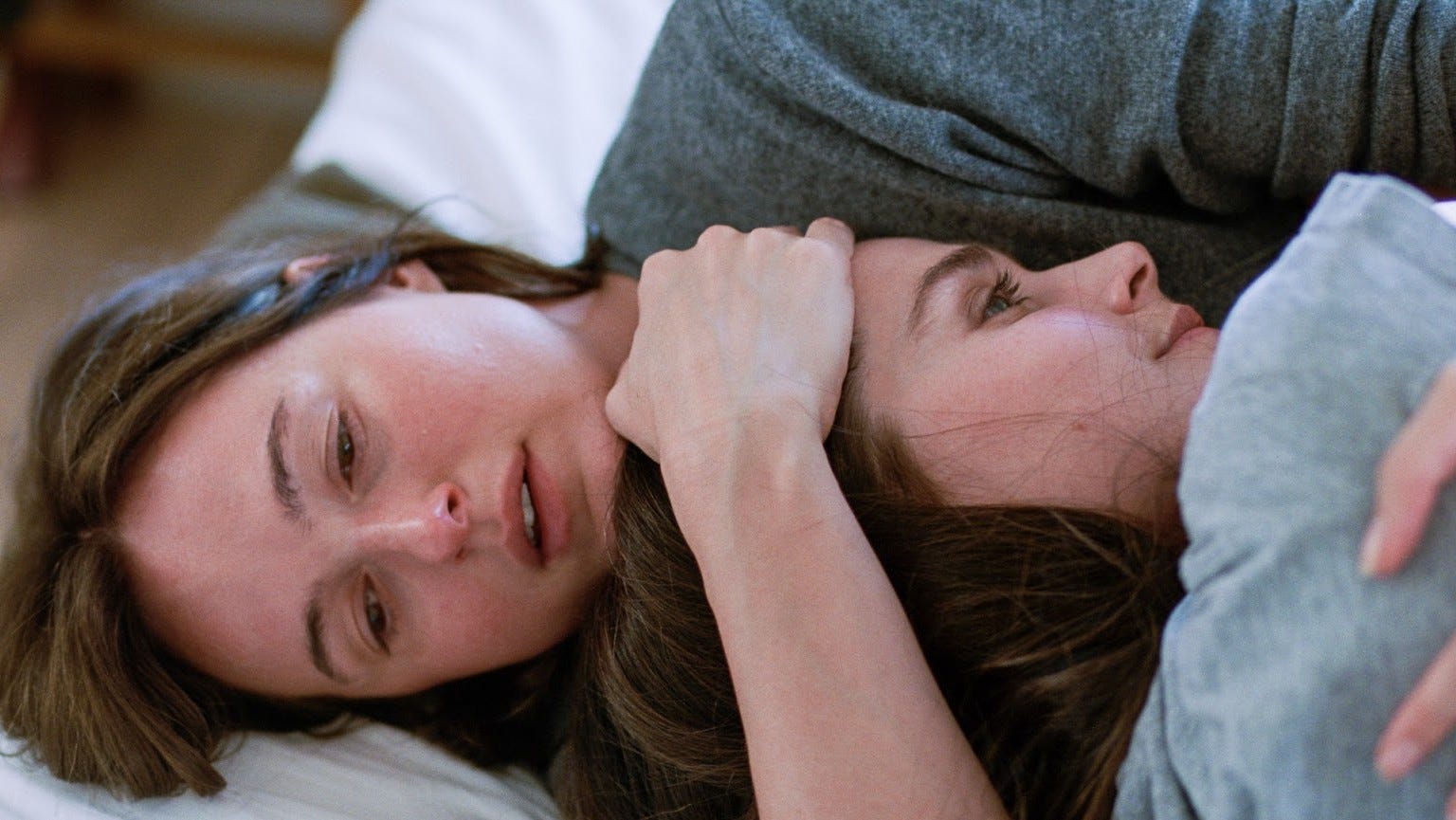
Trier being an actor’s director in this way only bolsters the level of connection I tend to have with his characters. It also feels more personal. I weirdly didn’t even really clock that it was a new entry in the potentially bloated and at times self-congratulatory collection of films about film until I engaged with the related discourse; it is ultimately, plot-wise, about a guy making a movie. Turns out Trier himself also took a while to realise this:
“To be honest, Eskil and I were kind of ashamed when we realised we were making a film about film people - it’s like, “Oh, no… it’s kind of self-centred… film people think film people are so interesting” - but we did it because it gave us a key into discussing a different form of communication, a different language, if you will.” - Trier for MUBI
As if the meta nature of a film about film people wasn’t enough, Trier’s family of filmmakers adds an extra layer of reflexivity to the situation. His father Jacob Trier worked in the sound department on many Norwegian films, and his maternal grandfather Erik Løchen was an experimental filmmaker and jazz musician who served as the artistic director of the Norwegian film production company Norsk Film from 1981 until his death in 1983. Trier has often spoken about how he grew up in that space, exposed to the systems of communication artists often employ and rely on. As a third generation filmmaker, he “constantly questioned the paradoxes of how you express yourself in art and how you express yourself differently in social life.”
To the extent that he may have had similar experiences or feelings to Nora or Agnes, growing up with people who express themselves artistically for a living, he now may find himself in a similar position to Gustav in being at once a filmmaker and a father. Not to speak for the man, but what comes out strongly in the film for me is a reckoning with how a filmmaker might have to adapt to include a larger capacity for different, perhaps more active modes of communication in a personal relationship as important and formative as one between a parent and a child. It appears to be Trier’s firsthand understanding of both of these perspectives that allows him to empathise naturally with his characters on opposite ends of this sort of relationship.
I’ve cited the MUBI Podcast episode on the film a few times, and it has a very interesting focus on the meta-ness that I mentioned before.6 I said that movies about movies can often be self-congratulatory, but the episode contends that what they are even more often is cynical. The likes of A Star is Born (1937) and its various remakes, Billy Wilder’s Sunset Boulevard (1950), the Coens’ Barton Fink (1991) and Robert Altman’s The Player (1992) are cited as performing the paradoxical magic trick of both exploiting the appeal to audiences of getting a peak behind the curtain of Hollywood while also highlighting the very exploitation that happens behind that curtain - as Gagliano puts it, “Showbiz’s ongoing myth of itself as a tragedy.”7
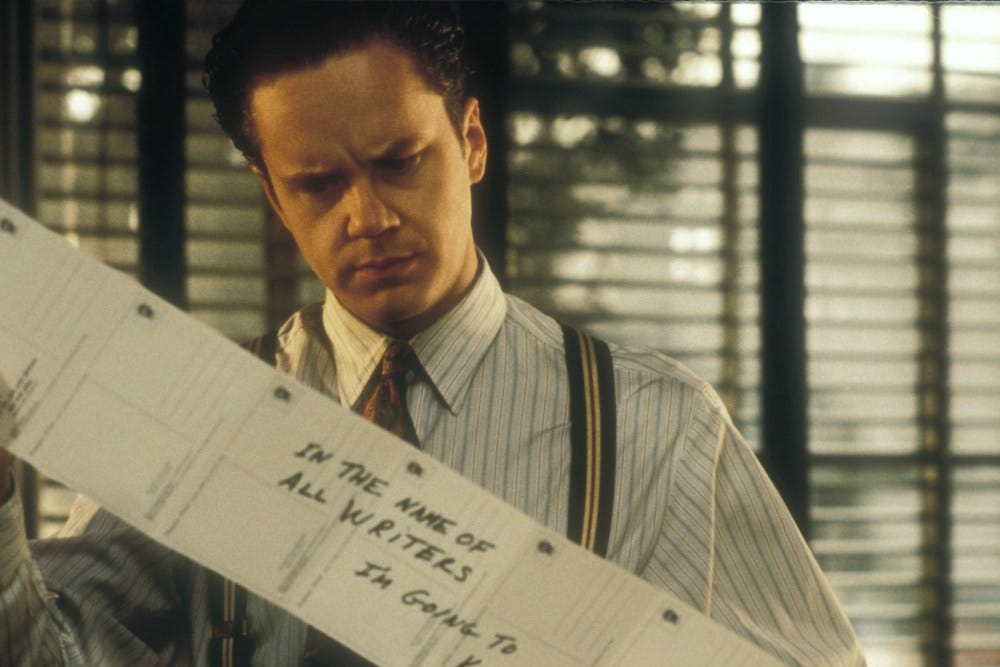
Sentimental Value flips that narrative. Outside of a few references to Netflix acquisitions and the prominence of straight-to-streaming, mostly with the purpose of highlighting Gustav feeling antiquated and out of touch with the industry, the film chooses not to reckon with cinema as a business but instead purely for what it can do to and for people as an art form. It ends with a moment between Nora and Gustav after shooting a pivotal scene in his film, which she ended up deciding to do. Gustav calls “cut”, and while the crew move in and start the next setup, the father and daughter look at each other for a while amongst the clutter of moving bodies. Skarsgård says they’re both surprised, they both feel as though they’ve said something to each other through the scene - Gustav through his creation of it, Nora through her performance. Maybe what they’ve wanted to say for a long time.
“It's the beginning of something. And maybe there's reconciliation coming, and maybe there's forgiveness.” - Skarsgård for MUBI
This most meaningful communication is done wordlessly, and through artistic collaboration. It reminds me of what Nora says to Rachel Kemp when asked why she didn’t take the role initially: in regards to her father, “We can’t really talk.” As it turns out, they didn’t have to. Words would never do the complexity justice, and when you know and understand someone as well as Nora and Gustav realised they do, the artistic expression of that is effortless. There are parallels here with how Trier works with Reinsve, though of course without all the childhood trauma and abandonment issues that preceded the father-daughter relationship in the film.
“We don’t even talk - it’s very wordless communication in a way now. We know each other very well and know what we can communicate through each other.” - Renate Reinsve for Film at Lincoln Center.
Trier speculates as to why his film and films about cinema in general are starting to treat the art form more gently:
“First of all, times have changed in terms of fashion. Everything was ironic in the ‘90s and intimacy and authenticity seemed fake and done. And now I think we’re yearning for that sense of seeing each other more. We’re experiencing fragmentation and distancing through a lot of communication tools that are perceived as getting us closer, but perhaps [are] removing us from each other. So I think there’s that whole cultural thing of tenderness and yearning for some sense of contact.” - Trier for MUBI
So perhaps I needn’t be afraid of how cinema augments my capacity for social interaction and connection. It could be that it’s less of an escape and more of a tool, and one that I’m becoming less and less alone in using. That’s the hopeful view. Maybe Baudrillard and McLuhan might have something else to say. What you choose to believe really depends on your capacity for being hopeful these days - good luck.
And I didn’t even talk about the film’s post-war themes, its sense of place through the frame of the house or the brilliance of Fanning as Kemp. This is really some picture, man.
Sentimental Value is still in select theatres in London and New York and is available to stream on Hulu in the US and on MUBI in the UK, Ireland, Latin America and India.
It is likely owing to this that Mills is in conversation with Trier for the upcoming Criterion release of Sentimental Value.
The first of the so dubbed “Oslo Trilogy”, focusing on characters living in Oslo who feel somewhat lost and directionless, the two entries to follow being Oslo, August 31st (2011) and The Worst Person in the World (2021).
Not counting a minor role she played in Oslo, August 31st.
In the sense that Punch Drunk Love (2002) was a breakthrough in the already established funny man’s career.
The same can be said of Anders Danielsen Lie, who features in each of the Oslo Trilogy films as well as Trier’s latest.
It’s also a really well constructed episode in general, cutting together a lot of different independent conversation between host Rico Gagliano and the cast, creatives and even film scholars interwoven by the thread of Rico’s narration - would highly recommend to anyone interested in the film.
It’s worth noting that this precise trend may be largely exclusive to Hollywood given its inherent ties to the themes of the American dream present in these films.
first sentence is literally abed from community
Also re: 7, the only two examples of Bollywood making a movie about Bollywood I can think of are Om Shanti Om and Luck By Chance (both excellent) and I guess more recently bastards of Bollywood, but all of these talk much more about the nepotism and closed-off atmosphere of the industry from the perspective of a newcomer with aspirations rather than like…cinema as being moving/ the power of film etc.